 📞:13381527768
📫:export@zaxmedical.com
📞:13381527768
📫:export@zaxmedical.com
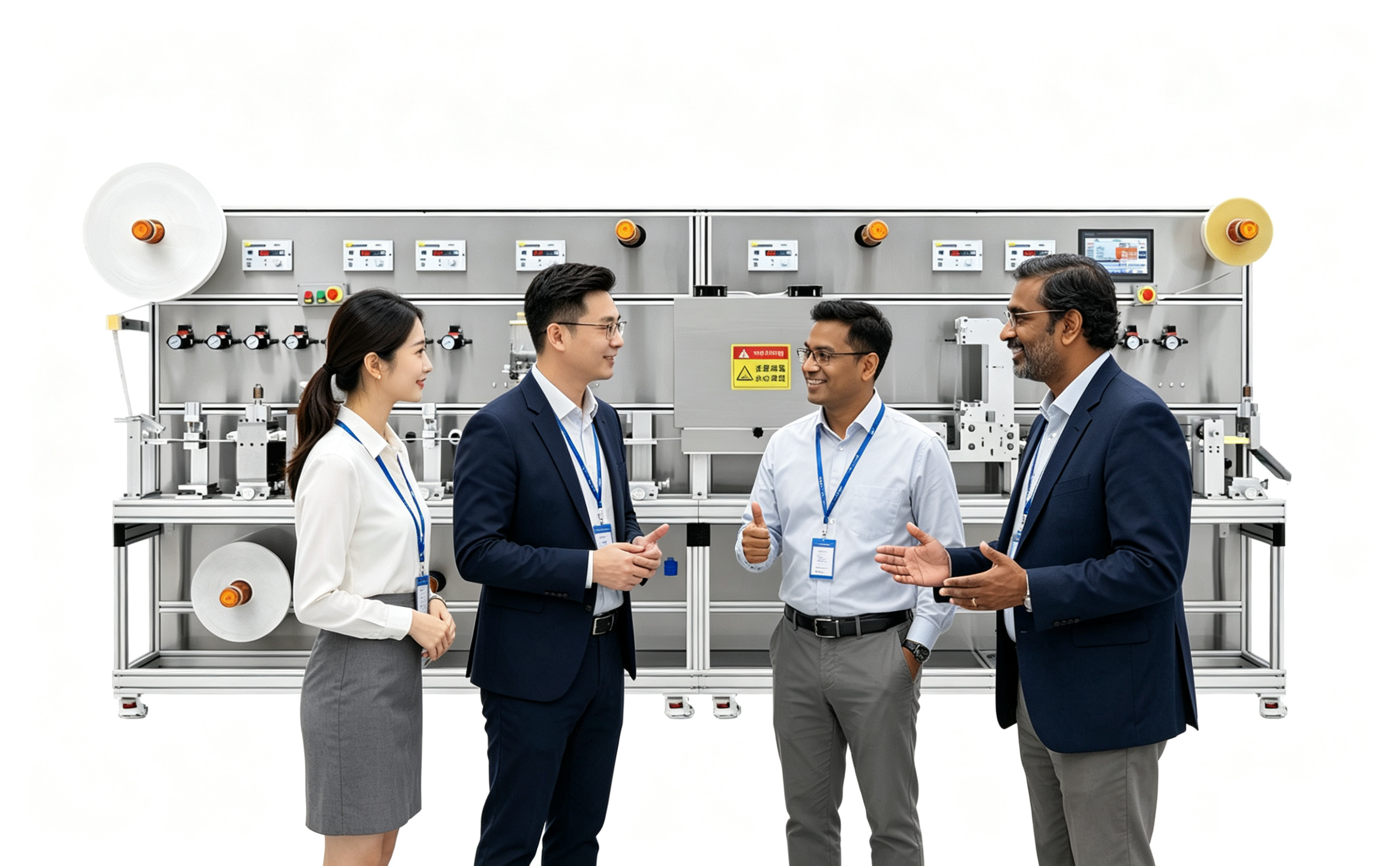
Embedded development of disposable ECG electrode production line
The embedded development of the disposable ECG electrode production line is the core underlying support for the automation, high-precision and stable mass production of the entire line. The coordinated operation of the entire equipment, including dispensing, die-cutting, conductive buckle detection, automatic waste disposal, and defect removal, relies entirely on the embedded control system for real-time scheduling. The industry mainstream adopts STM32 industrial grade MCU combined with lightweight RTOS to build the underlying architecture. It collects pressure, displacement, and resistance sensor analog signals through ADC, and uses PWM to accurately control the servo motor, dispensing valve, and waste roller speed, ensuring stable output of 110 pieces/minute standard production capacity. Embedded development primarily addresses the issue of timing conflicts in multiple workstations. In response to process requirements such as substrate switching, die-cutting size adjustment, and full conductivity testing, modular programming is used to develop motion control, signal detection, and sound and light alarm logic. Additionally, EMC anti-interference low-level drivers are added to avoid detection errors and equipment shutdowns caused by electromagnetic interference in the workshop, meeting the rigid requirements for equipment stability in medical consumables GMP production.
The embedded development of the functional layer revolves around the implementation of two core modules: process closed-loop control and safety protection. On the one hand, high-precision conductive buckle detection algorithms are developed to collect real-time electrode resistance data. Through embedded edge computing, qualified and defective products are quickly distinguished, and a linkage elimination mechanism is used to complete automatic diversion; On the other hand, it integrates fault recognition programs such as material shortage, breakage, droplet offset, and molding deformation. The photoelectric sensor signal is connected to the embedded IO port, and abnormal signals trigger the highest priority interrupt task, synchronously executing shutdown protection and sound and light alarm recording. The human-machine interaction interface is synchronized with embedded driver development, and the functions of touch screen parameter distribution, production capacity data storage, local storage of fault logs, and one click switching of multi specification formulas are deeply coupled with the underlying program. It supports quick calling of parameters for different shaped electrode cutting dies, and can complete production line process switching without the need to rewrite the program, greatly reducing the production line changeover and debugging cycle.
The embedded development of the disposable ECG electrode production line takes into account post operation and maintenance, data traceability, and iterative expansion. Modbus and Ethernet communication interfaces are reserved, which can be directly connected to the factory MES system to upload real-time output, yield rate, equipment failure, and conductivity detection data. The production traceability records are fully retained, in compliance with medical device production compliance archiving standards. At the hardware level, embedded boards are reserved with extended IO channels, and there is no need to replace the main controller for later production line upgrades, new visual inspection, and automatic palletizing modules; The software supports remote online upgrades, and after-sales engineers can remotely debug underlying control parameters, fix program vulnerabilities, and reduce on-site repair costs. A mature embedded development solution can not only ensure the long-term high-speed and fault free operation of the ECG electrode production line, but also provide underlying technical support for customized production line transformation and process iteration for equipment manufacturers. It is an indispensable technical foundation for modern medical consumables automation production lines.